Trustee vs. Executor: Two Roles, One Wrong Choice Can Cost Your Family Everything
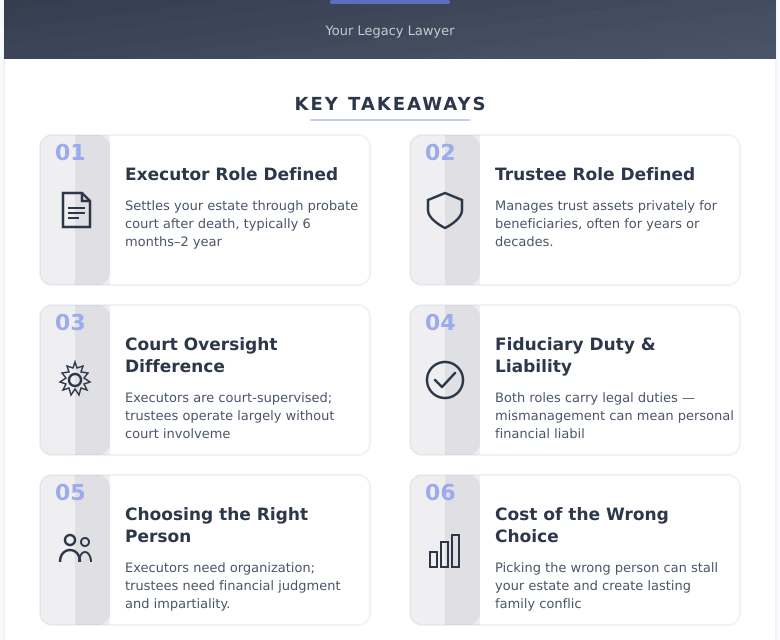
A trustee and an executor are two of the most important roles in any legacy plan - and they are frequently confused. An executor settles a person's estate through Georgia probate court, a process that typically runs six months to two years. A trustee manages assets inside a trust privately and often for decades, with no court oversight. Each role demands different skills: executors need organizational follow-through, while trustees need long-term financial judgment and the ability to stay impartial. Choosing based on family tradition rather than capability is the most common mistake. This breakdown covers both roles in plain terms, walks through how to evaluate candidates for each position, and explains when a professional trustee or executor makes more sense than a family member. Georgia-specific rules, compensation norms, and successor planning details are included throughout. Read More