The Truth About Contesting a Will That Most Families Learn Too Late
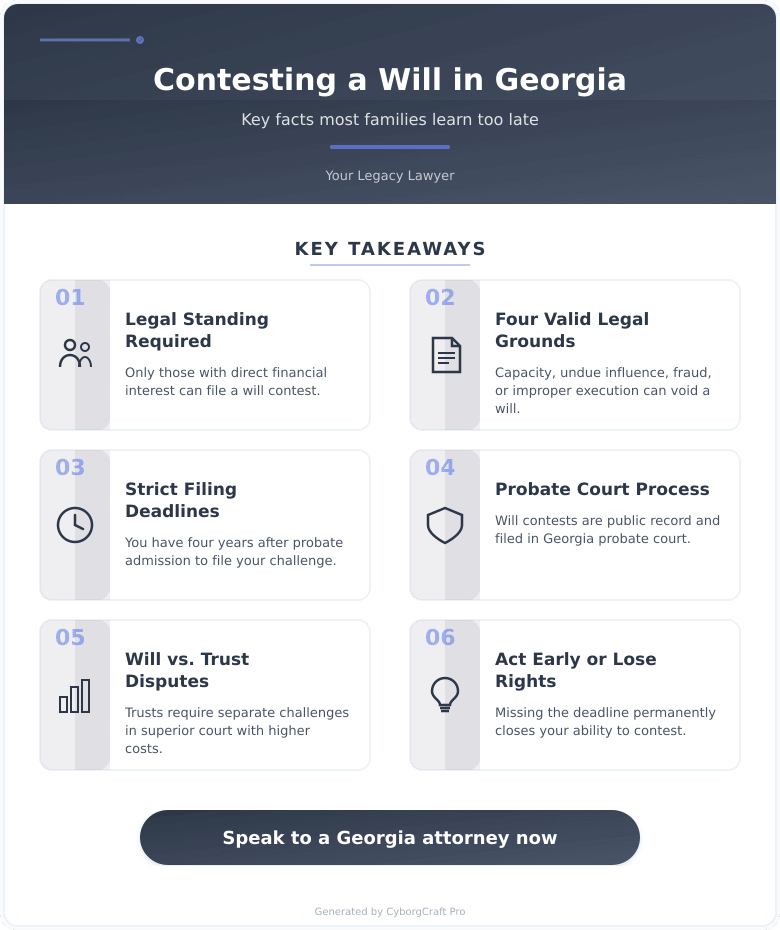

This guide focuses specifically on how will contests work in Georgia, who can file one, what legal grounds apply, and what the process actually looks like.
Will Contest Definition: A will contest is a formal legal challenge filed in probate court disputing the validity of a deceased person’s will, based on grounds such as lack of testamentary capacity, undue influence, fraud, or improper execution under state law.
The most common mistake families make is waiting too long. Georgia law sets strict deadlines for filing a will contest, and missing that window closes the door permanently. If you believe something went wrong with a loved one’s will, getting clear information now matters more than you might think.
Who Can Contest a Will in Georgia?
Not just anyone can challenge a will. Georgia courts require that the person filing a contest has legal standing, meaning they must have a direct financial interest in the outcome. This typically includes:
- Beneficiaries named in the will
- Heirs who would inherit under Georgia intestacy law if no valid will existed
- Creditors with claims against the estate in limited circumstances
- Anyone named in a prior version of the will
If you are not in one of these categories, a Georgia court will likely dismiss your challenge before it reaches any factual review. Standing is the first hurdle, and it is a real one.
The Legal Grounds for Contesting a Will
Lack of Testamentary Capacity: The person who made the will (the testator) must have been of sound mind at the time of signing. In Georgia, this means they understood the nature of making a will, knew the general extent of their property, and recognized who their natural heirs were. Dementia diagnoses alone do not automatically invalidate a will, but they are relevant evidence.
Undue Influence: This is a recognized ground for contesting a will in Georgia. It applies when someone pressured or manipulated the testator into signing a will that did not reflect their true intentions. Caregivers, new romantic partners, or relatives who isolated the testator are common examples.
Fraud or Forgery: If the testator was deceived into signing a will under false pretenses, or if the signature itself was forged, the document can be challenged on fraud grounds.
Improper Execution: Georgia law requires specific formalities. Under Georgia Title 53, a valid will must be signed by the testator in the presence of two competent witnesses who also sign. Any deviation from these requirements can render the will invalid.
Thinking about whether one of these grounds applies to your situation? Contact us for a straightforward conversation about your options.
Contesting a Will vs. Disputing a Trust: Key Differences
| Factor | Will Contest | Trust Dispute |
|---|---|---|
| Where Filed | Georgia Probate Court | Superior Court (usually) |
| Public Record | Yes | Often No |
| Timeline | Months to years | Months to years |
| Assets Covered | Probate assets only | Trust assets only |
| Grounds Required | Capacity, undue influence, fraud, execution | Similar plus trustee misconduct |
| Cost Range (2026) | $5,000 – $50,000+ | $5,000 – $75,000+ |
The verdict: Will contests move through Georgia probate court and are public record. Trust disputes often involve different courts and different procedural rules. If someone used a trust to transfer most assets before death, a will contest alone may not be enough. You may need to challenge both documents, which is why understanding the full picture matters early.
How Long Do You Have to Contest a Will in Georgia?
Georgia law gives interested parties a limited window to file. Once a will is admitted to probate, you generally have four years to file a solemn form probate challenge. But here is the catch: if the will was probated in common form without notice to heirs, the clock may start running differently. According to the Georgia Courts system, procedural deadlines vary by county and probate method.
Do not assume you have time. Families who wait to “see how things shake out” often find the deadline has passed before they realized it applied to them.
Your Will Contest Action Plan
- Step 1 – Confirm Standing: Identify whether you qualify as an interested party under Georgia law. Without standing, the case ends before it starts.
- Step 2 – Gather Evidence Early: Collect medical records, financial documents, communications, and witness information while memories are fresh and records are accessible.
- Step 3 – Check the Deadline: Find out whether the will was probated in common form or solemn form and calculate your filing window accordingly.
- Step 4 – Consult an Attorney: Will contests involve procedural rules, evidentiary requirements, and strategic decisions that are difficult to navigate without legal guidance.
- Step 5 – File in the Correct Court: In Georgia, will contests go to the probate court in the county where the deceased resided. Filing in the wrong court wastes time and money.
- Step 6 – Prepare for the Timeline: Contested cases in Georgia can take months to years to resolve depending on complexity. Cases involving significant assets often require additional time.
At Your Legacy Lawyer, we help families across Atlanta, Cobb County, Marietta, Sandy Springs, Smyrna, and surrounding communities understand their rights and evaluate whether a contest is worth pursuing.
Feeling uncertain about whether this applies to your situation? Let’s talk. Reach out here and we will walk you through your options with no pressure and no obligation.
Common Mistakes That Sink Will Contests
- Waiting too long and missing Georgia’s filing deadlines
- Assuming a diagnosis of dementia automatically proves incapacity at signing
- Filing without gathering medical or financial records first
- Contesting a will without understanding what assets it actually controls
- Underestimating litigation costs before committing to a full contest
Key Takeaways for Georgia Residents in 2026
- Standing is required – only people with a direct financial interest can challenge a will in Georgia probate court
- Four grounds apply – lack of capacity, undue influence, fraud, and improper execution are the recognized bases for a contest
- Deadlines are strict – Georgia generally allows four years from probate admission, but circumstances vary
- Costs are real – litigation ranges from $5,000 to $50,000 or more depending on complexity
- Evidence matters most – medical records, witness accounts, and financial history drive outcomes in contested cases
Frequently Asked Questions
Can a will be contested after probate is complete in Georgia?
Yes, but the window is limited and depends on how the will was probated. If probated in common form, heirs have up to four years to file a challenge. Once the estate is fully closed and distributed, recovery becomes significantly harder even if the contest succeeds.
How do you prove undue influence in a Georgia will contest?
Proving undue influence requires showing that someone pressured the testator to the point that the will reflects the influencer’s wishes rather than the testator’s own. Evidence typically includes isolation of the testator, sudden changes to prior wills, and the influencer’s control over daily life and finances.
What does it cost to contest a will in Georgia?
Will contest litigation in Georgia typically ranges from $5,000 to $50,000 or more depending on complexity, number of witnesses, and whether the case goes to trial. Many attorneys handle these cases on an hourly basis, though fee structures vary. Always discuss costs openly before committing.
What happens to the estate while a will contest is pending?
The probate court generally places a hold on final distribution of assets until the contest is resolved. The estate continues to be administered, expenses paid, and assets preserved, but beneficiaries do not receive final distributions until the court rules.
Can a no-contest clause prevent a challenge in Georgia?
Georgia does recognize in terrorem (no-contest) clauses, which disinherit anyone who challenges the will and loses. However, if you have probable cause to bring the challenge, Georgia courts may not enforce the clause against you. This is a strategic decision worth discussing with an attorney before filing.
Do I need an attorney to contest a will in Georgia?
Technically no, but practically speaking, yes. Will contests involve procedural rules, evidentiary standards, and courtroom proceedings that are difficult to navigate without legal training. The stakes are usually high enough that professional guidance pays for itself.
How is a will contest different from probate litigation?
A will contest challenges the validity of the will itself, while probate litigation covers a broader range of disputes including executor misconduct, creditor claims, and asset distribution disagreements. Visit our probate litigation page to learn more about the full scope of disputes that arise during the probate process.
Ready to Understand Your Options?
You do not have to figure this out alone. If you suspect a loved one’s will does not reflect their true wishes, or if you have been excluded from a will you expected to be part of, getting clear legal information quickly is the most important step you can take right now in 2026.
Deadlines in Georgia are real. Evidence disappears. And the longer families wait, the harder these cases become to build.
Contact us today for a direct, honest conversation about whether contesting a will makes sense for your situation. No jargon. No pressure. Just answers.
This content is for general informational purposes only and does not constitute legal advice. For guidance specific to your situation, consult a licensed Georgia attorney.